
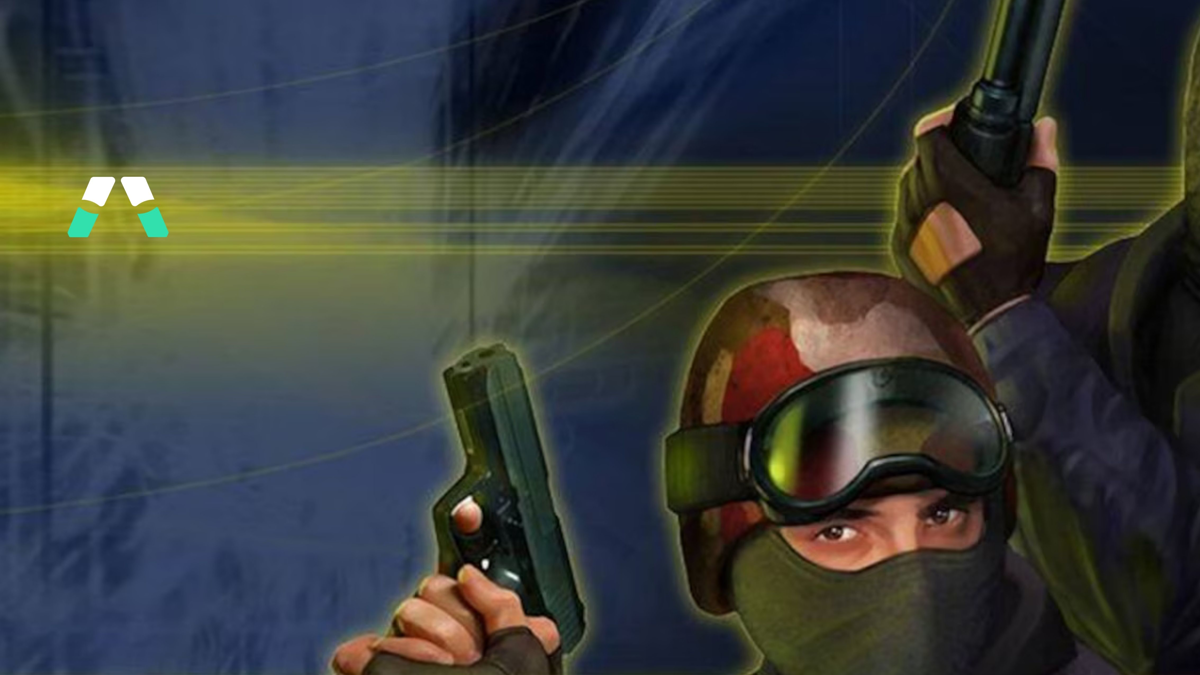
Video game all counter strike games holds a special place in the hearts of shooter fans around the globe. From humble beginnings as a community-driven Half-Life mod, this franchise has transformed into a competitive juggernaut that boasts millions of dedicated players. By focusing on teamwork, precision, and tactical depth, All Counter Strike Games In Order have become cornerstones in the world of eSports.
In this guide, we will delve into the All Counter Strike Games Series, charting each major release and some noteworthy variations. Along the way, we’ll answer critical questions such as how many counter strike games are there and how long are counter strike games on average. We’ll also look into new counter strike games that continue to shape the franchise’s future.
Throughout its evolution, counter strike has embodied both simplicity and complexity. On one hand, it’s easy to learn the basics, like moving carefully to avoid giving away your position or saving your economy for a full buy in the next round. On the other hand, the high skill ceiling requires unwavering practice and a deep understanding of teamwork.
This duality—fast vs. slow, rewarding vs. punishing—fuels a passionate community that stretches from local LAN cafés in Los Angeles to eSports stadiums in Europe and Asia. Ready to explore this legendary FPS phenomenon? Let’s jump right in.
[ez-toc]All Counter Strike Games Series
The All Counter Strike Games Series is rooted in realism, teamwork, and strategic gameplay. Each major entry has introduced unique mechanics, graphical updates, or game modes while preserving the core formula of Terrorists vs. Counter-Terrorists. Below, we break down the main timeline of the series, touching on how it started and how it continues to evolve.
The Complete List of Counter-Strike Titles
Over the years, multiple versions and updates have been released. Whether considered “standalone games” or major updates, each iteration contributed significantly to the Video game all counter strike games canon. Here is the comprehensive list in chronological order:
1. Counter-Strike (2000)
The very first counter strike retail release came out in 2000, built from the original 1999 Half-Life mod. This version quickly became an international hit, cementing the game’s position as a leading tactical shooter. It offered balanced maps like Dust and Aztec, setting a high bar for subsequent titles.
- Positive Aspects: Simple yet skill-intensive gameplay; introduced iconic maps.
- Negative Aspects: Limited graphical fidelity by today’s standards; fewer official maps than later versions.
2. Counter-Strike 1.3
Coming out shortly after the initial 1.0 release, Counter-Strike 1.3 introduced a handful of updates to weapon balance, netcode, and map tweaks. While often overshadowed by the later 1.6 version, 1.3 was a milestone that refined the mod-to-retail transition.
- Fast vs. Slow: Gameplay could vary drastically depending on your team’s coordination.
- Rewarding vs. Punishing: Early netcode improvements made headshots even more satisfying, yet also more lethal if you were on the receiving end.
3. Counter-Strike 1.5
Arriving amid a rapidly expanding player base, Counter-Strike 1.5 polished various gameplay mechanics and introduced new official maps while retiring older or less popular ones. It was around this era that the game’s LAN tournament scene began growing rapidly in places like Europe and North America.
- Positive: Greater map variety; refined weapon physics.
- Negative: Some fans clung to older versions and disliked changes to recoil mechanics.
4. Counter-Strike 1.6
Considered by many old-school players to be the definitive classic, Counter-Strike 1.6 featured more robust anti-cheat measures, HUD improvements, and better stability. It also debuted the iconic shield for Counter-Terrorists (although it had mixed reception) and introduced the Steam platform requirement, which helped unify the player base.
- Fast vs. Slow: Matches could end quickly with coordinated rushes or drag out in intense stand-offs.
- Positive vs. Negative: The widely praised version attracted even more players, but some disliked the forced shift to Steam.
5. Counter-Strike 1.8
While not as historically iconic as 1.6, Counter-Strike 1.8 represented another evolution for fans who wanted something slightly more modern but still rooted in the classic experience. It often included custom mods and was popular in community-run servers.
- Positive: Retained the beloved 1.6 feel while adding small performance boosts.
- Negative: Not officially supported in the same way as 1.6, leading some to dismiss it as merely a community patch.
6. Counter-Strike: Condition Zero (2004)
This title attempted to broaden the audience by adding a single-player mode with bots and scripted missions. While it introduced minor graphical enhancements and updated maps, it remained overshadowed by the next big engine upgrade. Condition Zero brought in players who preferred offline experiences, which was both a positive expansion of the community and a negative point for purists who only cared about competitive multiplayer.
7. Counter-Strike: Source (2004)
Built on Valve’s Source engine, this version modernized physics, character models, and maps, giving the franchise a fresh look. Some praised it for improved realism, while others disliked changes to recoil and movement. Still, Counter-Strike: Source was a mainstay in LAN cafés and online servers worldwide, showcasing the brand’s enduring appeal.
8. Counter-Strike: Global Offensive (2012)
Often called CS:GO, this entry became the gold standard in modern eSports. It introduced features like ranked matchmaking, Steam Workshop integration for custom maps and skins, and continuous updates called “Operations.” The introduction of weapon skins added a new layer of personalization, though it also fueled controversies around skin gambling. Nonetheless, the refined mechanics and robust competitive scene propelled CS:GO to legendary status.
9. Counter-Strike 2 (2023-2024)
The newly introduced Counter-Strike 2 (CS2) is seen by many as the next evolution in the franchise, promising upgraded graphics on the Source 2 engine, improved netcode, and an overall polished experience. Though still rolling out major updates, CS2 aims to retain the spirit of classic gameplay while offering modern enhancements. Fans are divided on whether it surpasses CS:GO, but it continues to attract both loyal veterans and curious newcomers.
How Many Counter Strike Games Are There?
Given all the iterations listed above, one might ask, “How many counter strike games are there?” Officially, Valve recognizes major releases like Counter-Strike (2000), Counter-Strike: Condition Zero, Counter-Strike: Source, Counter-Strike: Global Offensive, and Counter-Strike 2 as the core installments. However, counting community-supported versions (1.3, 1.5, 1.6, 1.8) and counter strike online variations expands the list significantly.
- Official Main Titles (Recognized by Valve):
- Counter-Strike (2000)
- Counter-Strike: Condition Zero (2004)
- Counter-Strike: Source (2004)
- Counter-Strike: Global Offensive (2012)
- Counter-Strike 2 (2023-2024)
- Classic/Community Versions:
- Counter-Strike 1.3
- Counter-Strike 1.5
- Counter-Strike 1.6
- Counter-Strike 1.8
- Regional Spin-Offs:
- Counter-Strike Online (Free-to-play versions for Asian markets)
- Counter-Strike Online 2
Ultimately, the question of exactly how many games depends on whether you count only mainline Valve releases or also factor in smaller community and regional projects.
Core Gameplay: Fast vs. Slow, Positive vs. Negative
One of the reasons counter strike games remain so appealing is the interplay between swift, adrenaline-pumping moments and cautious, strategic pacing. Here are a few contrasting elements:
- Fast vs. Slow
- Fast: Rounds can end in seconds if an entire team decides to rush a bomb site and execute a flawless strategy.
- Slow: Alternatively, teams might hold angles and check corners methodically, drawing out each round into a tense standoff.
- Positive vs. Negative
- Positive: The community-driven economy of skins and maps fuels creativity and a sense of ownership.
- Negative: The intense competition can breed toxicity, and the high skill ceiling may be intimidating for newcomers.
These antonyms highlight how Video game all counter strike games can be both accessible and punishing, making every victory feel truly earned.
How Long Are Counter Strike Games?
Curious about how long are counter strike games on average? The duration varies depending on the mode and skill levels of the players involved.
Competitive vs. Casual Match Durations
- Competitive Matches
Typically use a best-of-30 format (first team to 16 rounds wins). Each round lasts about 1 minute 55 seconds, though that can change with game updates or server modifications. A close match often extends beyond 45 minutes if the teams are evenly matched and rounds go the distance. - Casual Matches
Generally shorter, as the round structure is more relaxed and often fewer rounds are required for victory. You might spend 15–25 minutes in a casual session, making it a good option for quick gaming sessions.
Factors Affecting Round Length
- Skill Disparity: A dominant team might end rounds quickly, reducing the overall match time.
- Map Layout: Complex maps with multiple choke points and vertical layers (e.g., Nuke, Vertigo) can extend rounds due to cautious movement and strategic setups.
- Communication: Well-coordinated teams can stall or accelerate play, influencing match length.
New Counter Strike Games and Future Outlook
For years, fans wondered if Valve would ever release a true sequel to CS:GO or if the franchise would remain on the same platform indefinitely. Counter-Strike 2 emerged as the answer, providing a fresh coat of paint via the Source 2 engine and incorporating advanced graphics, improved physics, and refined map design. While it’s still young, it promises to shape the next generation of counter strike games with more frequent updates and community events.
Other potential developments may include VR integrations or new spin-offs akin to counter strike online versions for different markets. Given Valve’s track record of slow but impactful changes, the road ahead is both exciting and unpredictable.
Comparison with Other FPS Titles
Comparing counter strike to other FPS juggernauts like Call of Duty or Battlefield reveals stark differences:
- Focus on Economy: In CoD, you respawn each round with standard loadouts or create-a-class setups. In counter strike games, you must manage your in-game currency to purchase weapons, adding a deeper strategic layer.
- Map Design: All Counter Strike Games In Order emphasize balanced, symmetrical maps with choke points and clear objectives, whereas some FPS titles prefer sprawling battlefields or rapid respawns.
- Community-Driven: Steam Workshop integration fosters custom content, from skins to user-made maps, fueling a sense of ownership and diversity.
While some might see these differences as positive for strategic depth, others might find them negative for being less accessible compared to games with simpler progression systems.
Challenges and Controversies in Counter Strike Games
No discussion of the All Counter Strike Games Series would be complete without addressing a few controversies:
- Skin Gambling and Microtransactions: The introduction of weapon skins in CS:GO triggered an explosion of third-party betting sites, leading to legal and ethical debates.
- Cheating Issues: Despite Valve’s anti-cheat system, hacking remains an ongoing struggle in public servers.
- Toxicity in Competitive Play: Voice chat or text chat can become a hotspot for harassment, a problem not unique to counter strike but prevalent in many competitive online games.
Despite these negatives, developers and community leaders continually seek solutions, such as improved anti-cheat measures, stricter chat moderation, and more transparent reporting systems.
From the early 2000 release to the introduction of Counter-Strike 2, the All Counter Strike Games In Order represent a remarkable journey through FPS history. Each version—be it Counter-Strike 1.3, Counter-Strike 1.6, or Counter-Strike: Global Offensive—has left its mark on the gaming world, showcasing both the positive potential of tight-knit communities and the negative aspects of an intensely competitive environment. The question, “How many counter strike games are there?”, ultimately hinges on whether you count only Valve’s major releases or also honor the numerous community adaptations and spin-offs like counter strike online.